


Blog
Gold Vs. Property: Which Is Better For Long-Term Investment?
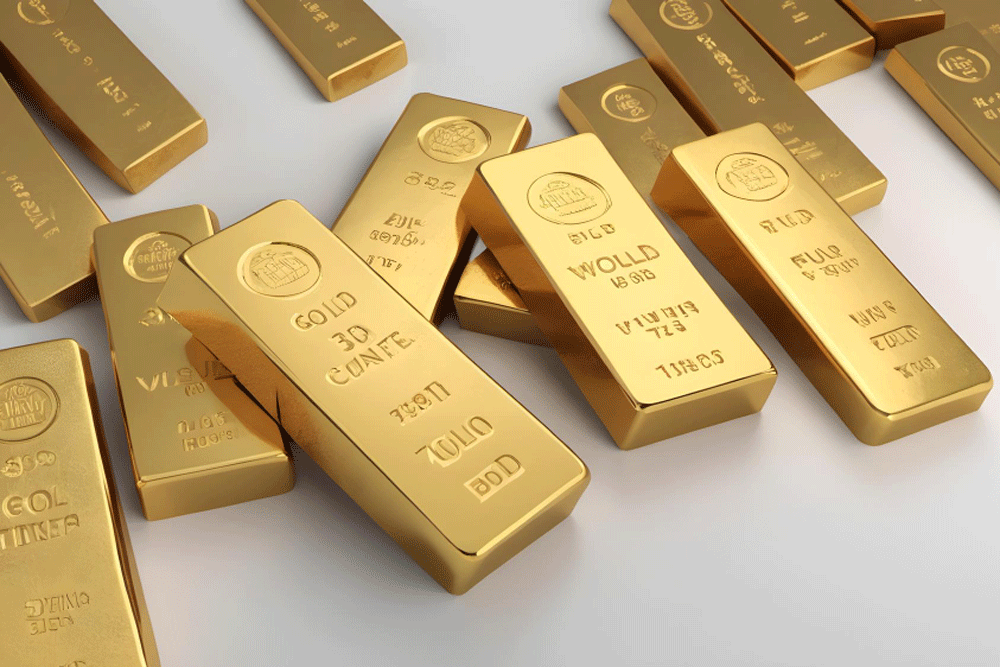
Long-term investment decisions depend on stability, liquidity, and growth potential. Comparing physical assets like real estate and precious metals reveals clear differences in risk exposure, accessibility, and long-range value retention. Each option appeals to different financial goals, and each comes with its own trade-offs during uncertain economic cycles.
Long-term investment decisions depend on stability, liquidity, and growth potential. Comparing physical assets like real estate and precious metals reveals differences in risk exposure, accessibility, and long-range value retention. Each option appeals to different financial goals, and each comes with its own trade-offs during uncertain economic cycles.
When comparing gold with real estate, the discussion often centers on control, timing, and how each asset behaves under pressure. Both options have strong followings, yet they serve very different financial strategies.
Some investors prioritize tangible ownership tied to land. Others value portability and independence from traditional markets.
The Differences
Real estate ties value to location, demand cycles, and local economic health. Property ownership involves taxes, upkeep, insurance, and long-term commitments that can stretch across decades.
It also introduces external dependencies such as tenants, zoning rules, and market fluctuations tied to interest rates.
Property can also build equity over time through mortgage payments and market appreciation, and it gives owners a tangible asset they can use directly, such as a home or rental unit.
Gold, by contrast, operates independently of these localized pressures. Its pricing reflects global demand and economic sentiment rather than a single region. Investors who buy gold are not tied to a specific location, giving them flexibility as regional or national economies change.
Property values can stagnate or decline during economic downturns. Gold has historically attracted investor interest during some periods of economic uncertainty, though its price can also fluctuate independent of property markets.
Liquidity and Access to Funds
Liquidity plays a big part in long-term planning. Property transactions can take weeks or months to complete. Sales require listings, negotiations, inspections, and closing processes that delay access to funds.
Property owners can sometimes access funds through refinancing or a home equity loan without selling the property outright, though this adds debt and approval requirements.
Gold presents a different experience. Investors who buy gold bars or coins hold an asset they can convert into cash much faster. This flexibility matters when market conditions change or when you need immediate access to funds.
This difference becomes even more noticeable in urgent situations. Property cannot be partially liquidated without complex arrangements. Gold allows incremental selling based on current needs.
Cost of Ownership Over Time
Owning property involves recurring expenses. Maintenance, repairs, property taxes, and insurance costs add up over time. These ongoing financial obligations can impact overall return, especially if rental income does not cover expenses.
Gold ownership does not carry the same burden. Storage and security considerations exist, yet they remain minimal compared to the consistent costs tied to real estate. This simplicity contributes to the appeal highlighted in discussions around gold investment advantages.
Over extended periods, minimizing recurring expenses can preserve more of the original investment value. This difference becomes more apparent when comparing decades of ownership.
Income Potential
Rental property can generate ongoing income in addition to any long-term appreciation, giving owners a potential return even before a sale. This income can offset some ownership costs, such as taxes and maintenance, depending on the property and market.
Physical gold does not produce income simply from being held. Its return comes only from a change in price between purchase and sale. This makes gold more of a store of value than an income-generating asset, which is worth weighing alongside property’s potential for rental cash flow.
Market Volatility and Risk Exposure
Property markets fluctuate based on economic cycles, interest rates, and local supply-demand conditions. A strong market can drive appreciation, yet downturns can lead to stagnation or losses that take years to recover.
Property risk can be partly managed through insurance and fixed-rate financing, which gold does not offer.
Gold reacts differently. It tends to attract attention during inflationary periods and economic uncertainty. Investors concerned about currency fluctuations have historically turned to gold, though its price can also be volatile in the short term. This pattern is part of the broader conversation around precious metals and long-term security.
Risk exposure also differs in terms of concentration. Property investments often tie a good portion of capital into a single asset. Gold allows diversification through smaller, divisible units.
Tax Considerations and Financial Planning
Taxes affect both asset classes, yet they operate under different frameworks. Property transactions involve capital gains, transfer taxes, and potential deductions tied to ownership and rental income.
Gold investments also carry tax implications, particularly when selling at a profit. Tax treatment for both assets can be complex and varies based on individual circumstances. Consult a tax professional before making decisions that affect tax outcomes.
This area requires careful planning. Investors considering long-term positioning often weigh how tax treatment will affect their final outcomes. Gold’s flexibility in transaction size can also help time those decisions.
Long-Term Value Retention
One of the most important considerations in comparing long-term assets is value preservation. Property can appreciate over time, yet it depends heavily on external conditions such as neighborhood development and economic growth. In strong or growing markets, real estate can appreciate significantly, sometimes outpacing inflation, while also providing usable living space or rental income.
Gold has historically been used as a store of value across generations. It doesn’t depend on infrastructure, tenants, or local demand. This has made it a common choice for those focused on wealth preservation rather than speculation.
Over decades, gold has often been cited as a hedge against inflation, though past performance does not guarantee future results. This characteristic continues to attract investors looking for long-term stability.
Accessibility for New Investors
Entry barriers differ significantly between these asset classes. Property investments often require substantial capital, financing approval, and long-term commitments. At the same time, financing options like mortgages allow property buyers to control a larger asset with a smaller upfront payment, a form of leverage not available with gold.
Gold offers a more accessible starting point. Investors can enter the market at various price levels without taking on debt or long-term obligations. This accessibility aligns with beginner tips for gold investment, making it a practical choice for those entering the market.
Entry-level flexibility lets investors build positions gradually rather than committing large sums upfront.
Control and Independence
Property ownership involves third parties at multiple stages. From agents and lenders to contractors and tenants, each layer introduces complexity. Property ownership does offer a different kind of control, since owners can renovate, improve, or use the asset directly in ways that gold cannot.
Gold ownership offers direct control. Once acquired, it requires no ongoing management or third-party involvement. This independence appeals to investors who prefer a straightforward approach to asset management.
Control also extends to mobility. Investors can store, transport, or sell gold without the logistical challenges tied to real estate transactions.
Economic Conditions and Performance
Economic cycles influence both asset classes in different ways. Rising interest rates can slow property markets, affecting both prices and buyer activity. Conversely, property can perform well during periods of economic growth and low interest rates, when demand and rental income tend to rise.
Gold tends to respond to broader financial uncertainty. During periods of inflation or currency instability, it has historically gained attention as a potential hedge, though it does not guarantee protection against losses. This behavior reinforces its position in long-term investment strategies focused on resilience.
The distinction between these reactions becomes clearer during global economic changes. Investors who prioritize stability often revisit the comparison between precious metals and real estate investments during uncertain times.
Portfolio Flexibility and Diversification
Diversification strengthens long-term investment strategies. Property can serve as a major asset within a portfolio, yet its size and illiquidity limit flexibility.
Gold contributes to diversification through scalability. Investors can adjust holdings based on market conditions without restructuring an entire portfolio. This adaptability contributes to its reputation as a balancing asset.
The ability to scale investments up or down without major disruptions adds another layer of appeal.
Storage, Security, and Practical Considerations
Property requires physical upkeep and long-term oversight. Maintenance issues, tenant concerns, and structural repairs demand attention over time.
Gold requires secure storage, yet it does not degrade or require repairs. Once properly stored, it remains unchanged regardless of external conditions. This simplicity reduces long-term management demands.
Security remains a priority for both asset types, yet the level of ongoing involvement clearly differs.
Explore Physical Gold Options with Hollywood Gold & Silver Exchange
If physical gold fits your investment strategy, Hollywood Gold & Silver Exchange can help you explore available gold bars, coins, and other precious-metal products.
Our team can explain factors such as weight, purity, premiums, and product differences so you can make a more informed purchase. Contact us or visit our Los Angeles location to learn more about available gold products.
FAQs
Gold has historically been viewed as a store of value tied to global demand and economic conditions. Property depends heavily on location and market cycles. Each carries risk, and neither guarantees returns.
Yes. Gold allows partial buying or selling based on market conditions. Property transactions typically involve full ownership changes, making adjustments less flexible.
Gold does not require maintenance, tenant management, or repairs. Once acquired and stored securely, it remains a passive asset.


